
People often use “flexibility” and “mobility” interchangeably, but they’re not the same. In fact, after 40 – and particularly for people living with chronic conditions – understanding the difference becomes essential for staying active and pain-free.
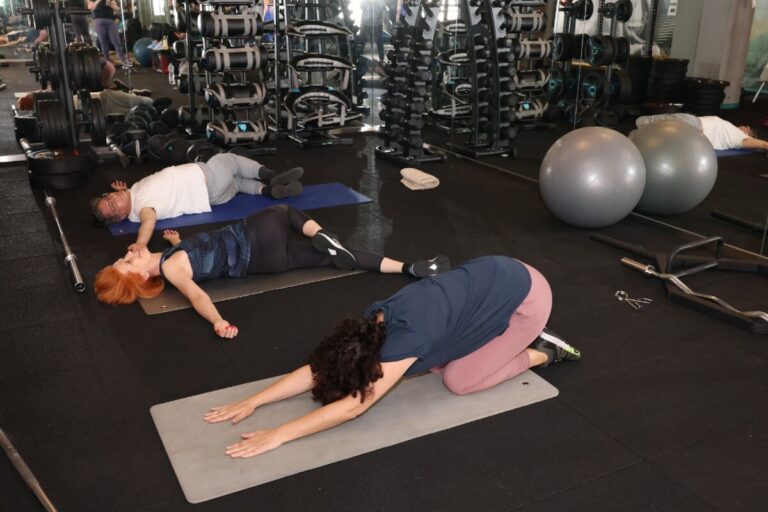
Flexibility refers to how well your muscles and tendons can lengthen without injury. Think of bending forward and comfortably touching your toes.
Mobility, however, is the active range of motion of your joints. It depends not only on muscle elasticity but also on joint health, the joint capsule, the surrounding tissues, and how well these structures can move together. For example, can you lift your arm overhead without arching your back to compensate?
With age, muscles tend to shorten, long sitting hours create stiffness, and the joint range of motion narrows. Regeneration slows down, which means injuries happen more easily. If you have a chronic condition, these changes may appear sooner: inflammation, circulation issues, or metabolic challenges make tissues less adaptable and more vulnerable.
When flexibility and mobility are limited, your risk of back, neck or shoulder pain increases, movement feels restricted, and everyday tasks become harder. But when you train them regularly – with a smart, periodized training structure – you move more freely, improve your performance, reduce chronic pain, and support healthy aging.
In short, after 40, and especially with chronic conditions, mobility and flexibility are not “extras”. They are the foundation of safe training, sustainable progress, and a life with fewer limitations.
If you’d like to try a simple 10-minute mobility + stretch routine designed with special attention to chronic conditions, feel free to contact me!